
Quick Take
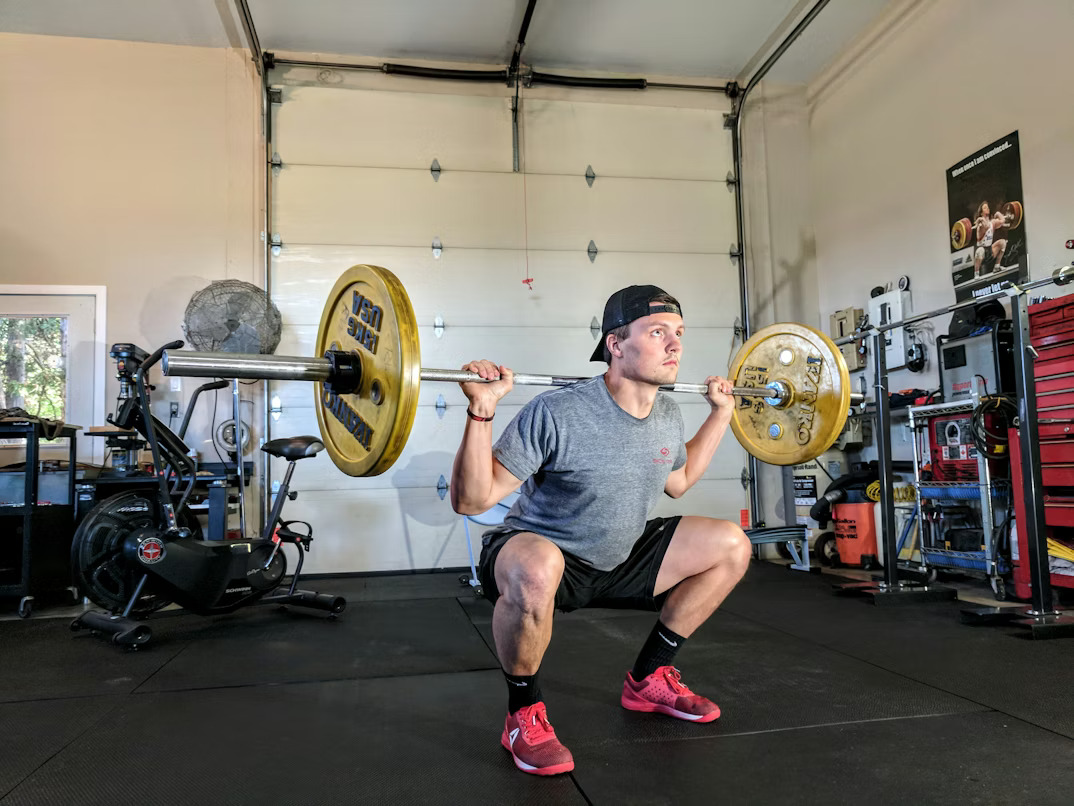
- The squat is a full-body, functional movement that builds real-world strength and athleticism by demanding core and stabilizer muscle engagement.
- The leg press isolates the lower body, allowing for greater loading with less systemic fatigue and reduced spinal compression.
- For pure quadriceps hypertrophy, research shows the leg press can produce greater EMG activation due to its fixed, stable movement path.
- The optimal strategy for leg development incorporates both exercises: squats for foundational strength and the leg press for targeted overload.
The quest for powerful legs often leads to a pivotal choice between two gym titans: the free-weight barbell squat and the machine-based leg press. This isn’t a trivial debate; it’s about understanding two distinct tools for building lower-body strength. One is a foundational test of total-body athleticism, while the other is a precision instrument for muscle isolation. Choosing the right one—or the right blend—depends entirely on your physiology and your goals.
Let’s break down the biomechanics, the science, and the practical application to settle the score.
Which Exercise Builds More Functional Strength?
Direct Answer: The barbell squat is unequivocally superior for building functional, transferable strength that applies to sports, daily life, and overall athleticism.
Explanation & Evidence:
Functional strength is the ability to produce and control force in unpredictable, real-world environments. The squat is a “closed-chain” exercise where your feet are fixed, mimicking natural movements like standing up, jumping, or lifting. It requires the coordinated effort of your quads, hamstrings, glutes, core, and back stabilizers to control the weight in three-dimensional space. This teaches your nervous system to manage load with balance and proprioception.
A study in the Journal of Strength and Conditioning Research concluded that “free-weight exercises like the squat produce greater neuromuscular activation and co-contraction of stabilizer muscles compared to machine-based exercises.”
The leg press, while excellent for building muscle, is an “open-chain” exercise where you move a load away from your body on a fixed track. This removes the balance and core stabilization demands, limiting its direct transfer to athletic performance.
Your Application
If your goal is to improve athletic performance, build resilience for daily tasks, or develop a strong core, the barbell squat must be a cornerstone of your training.
Which Exercise Is Safer for Your Lower Back?
Direct Answer
The leg press is generally safer for individuals with pre-existing lower back issues, as it minimizes spinal loading and shear forces when performed correctly.
Explanation & Evidence:
During a back squat, the barbell loads the spine axially (down the length of the vertebrae), creating significant compressive force. For a healthy spine with proper bracing, this is a potent adaptive stimulus. However, for those with disc issues, stenosis, or poor form, this compression can be problematic. The leg press supports the torso, offloading the spine and allowing the legs to be trained with minimal lower back involvement.
Biomechanical analyses note that “the seated, supported position of the leg press reduces lumbar spine compression and shear forces by over 50% compared to the loaded back squat, making it a viable option for back-sensitive populations.”
This does not mean squats are “dangerous,” but rather that the leg press provides a valuable alternative when spinal loading is contraindicated.
Your Application
If you have a history of lower back pain or injury, use the leg press to build leg strength safely. You can later progress to goblet or belt squats, which also minimize spinal load, before considering barbell squats.
Which Exercise Is Better for Isolating and Growing the Quads?
Direct Answer
For isolating the quadriceps and achieving maximal muscular overload with minimal technical demand, the leg press has a distinct advantage.
Explanation & Evidence
Because the leg press stabilizes your torso, you can focus solely on extending your knees. This allows you to use heavier loads or achieve deeper muscular fatigue without being limited by core or back strength. Electromyography (EMG) studies often show high levels of quadriceps activation in the leg press, and the ability to safely perform techniques like drop sets or partial reps makes it a hypertrophy powerhouse.
Research comparing muscle activation has found that “while squatting activates more total muscle mass, the leg press can produce equal or greater EMG activity in the vastus lateralis (outer quad) due to the elimination of stabilizer limitations.”
The squat is a better overall developer, but the leg press is a more efficient tool for overloading the quads specifically.
Your Application:
For targeting quadriceps hypertrophy, place the leg press later in your workout after squats. Use a full range of motion and techniques like rest-pause sets to push the quads to failure safely.
Can the Leg Press Compensate for Poor Squat Mobility?
Direct Answer
Yes. The leg press can be a crucial tool for building leg strength while you work to improve the ankle, hip, and thoracic mobility required for a deep, safe squat.
Explanation & Evidence
Many individuals lack the ankle dorsiflexion or hip flexion to squat deeply without compromising form (e.g., butt wink). Forcing a heavy squat with poor mobility is a recipe for injury. The leg press allows you to strengthen the quads, glutes, and hamstrings through a full range of motion that you control, independent of your current mobility constraints.
Physical therapists often use leg press variations as a “bridge exercise” to “maintain lower-body strength during periods where mobility work is the primary focus for improving squat mechanics.”
It’s not about replacing the squat forever, but about maintaining leg strength while you correct the movement pattern.
Your Application
If you struggle with squat depth, use the leg press as your primary strength builder. Simultaneously, dedicate separate sessions to mobility work for your ankles, hips, and thoracic spine, and practice squat patterning with light weights or bodyweight.
What Is the Optimal Strategy for Maximum Leg Development?
Direct Answer
The most effective long-term strategy is to use both exercises in a periodized manner: squat for primary strength and neurological development, and leg press for supplemental hypertrophy and volume.
Explanation & Evidence
This is not an either/or proposition. They are complementary. The squat builds the foundational strength, core stability, and hormonal response. The leg press then allows you to add additional volume (total sets and reps) to the quads without accumulating excessive systemic or nervous system fatigue from more squatting, which can lead to overtraining.
A periodized programming approach, as endorsed by strength coaches, “uses compound free-weight lifts like the squat for strength phases, and incorporates machine-based assistance work like the leg press during hypertrophy phases to maximize muscle growth while managing fatigue.”
This integrated approach yields better results than relying on either exercise alone.
Your Application
Structure your leg day with squats first (3-5 sets of 5-8 reps) when you are freshest. Afterward, move to the leg press (3-4 sets of 10-15 reps) to add high-rep, quad-focused volume. Finish with isolation work like leg extensions and hamstring curls.
FAQ: Your Squat vs. Leg Press Questions, Answered
Q: Will leg press make me better at squatting?
A: Indirectly, yes. A stronger leg press can increase the potential strength of your prime movers (quads, glutes). However, it won’t improve the core stability, balance, or technique required to express that strength in a squat. You must practice squats to improve at squats.
Q: Why can I leg press so much more than I can squat?
A: This is normal. The leg press removes stabilizing demands, allows you to use a shorter range of motion if desired, and leverages mechanical advantages. There is no direct correlation; your leg press weight will always be significantly higher than your squat.
Q: Are hack squats a good middle ground?
A: The hack squat machine is an excellent compromise. It provides more spinal support than a free-weight squat but requires more core and stabilizer engagement than a leg press. It’s a fantastic tool for overloading the quads with a fixed path, often considered a hybrid of the two.
Q: Which is better for glute development?
A: The barbell squat, particularly low-bar and wide-stance variations, generally places greater emphasis on the glutes and hamstrings. To target glutes on the leg press, use a high foot placement and focus on driving through your heels, ensuring a deep stretch at the bottom.
Q: Should beginners start with leg press or squats?
A: Beginners should start by learning bodyweight squats and goblet squats to master the movement pattern with minimal risk. The leg press can be introduced early to build basic leg strength, but it should not replace learning the fundamental movement skill of the squat.
The debate isn’t about crowning a winner; it’s about allocating resources. The squat is your foundation—an investment in total-body strength and resilience. The leg press is your specialization—a targeted tool for hypertrophy and strength preservation when the squat isn’t an option.
By strategically employing both, you’re not hedging your bets; you’re building a comprehensive leg development plan that is smarter, safer, and more effective than relying on dogma alone.
Ready to build a balanced lower body program? Explore our science-backed leg day workout templates at BeeFit.ai.
This article is for informational purposes only and is not a substitute for professional medical advice, diagnosis, or treatment. Always seek the advice of your physician or other qualified health provider before beginning any new exercise program, especially if you have pre-existing conditions.
Share :

