
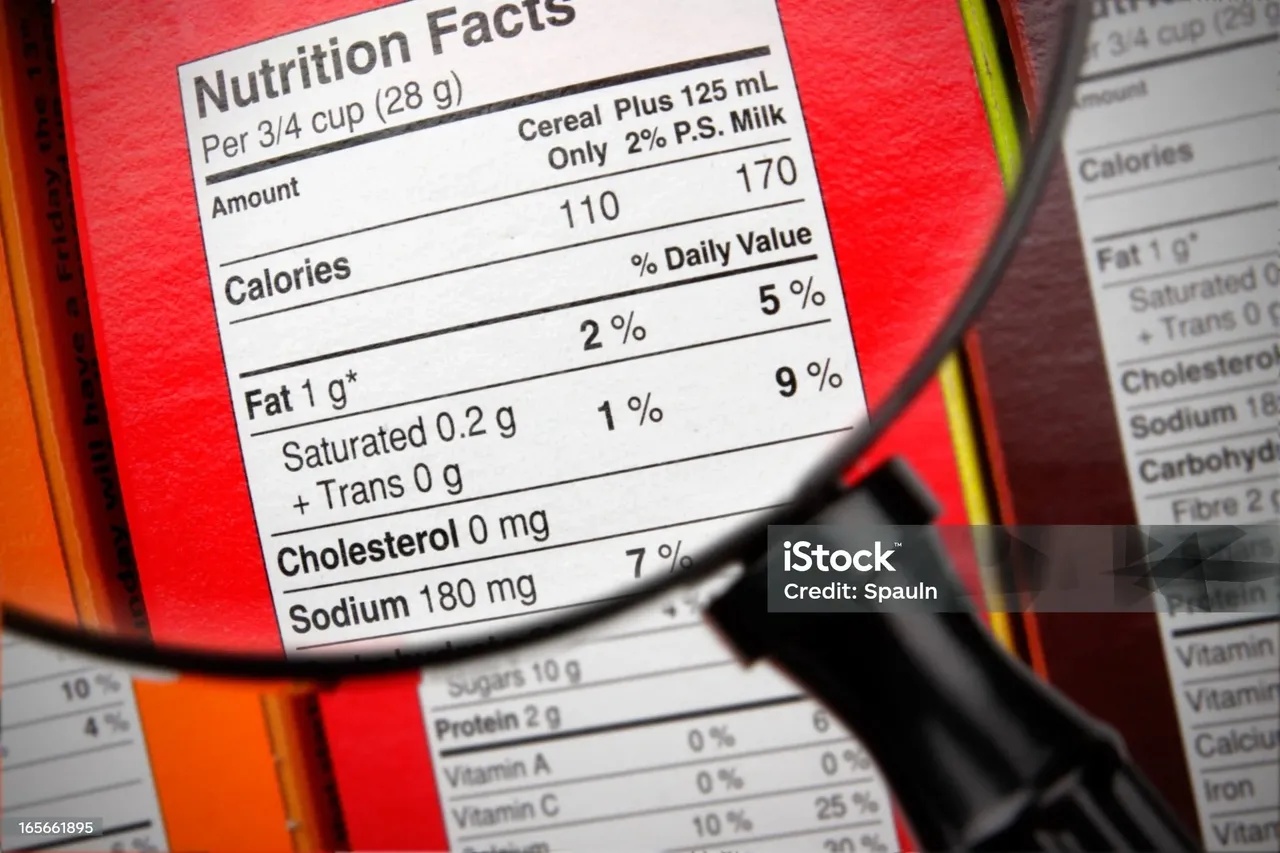
Quick Take
- The Serving Size is the most critical piece of data; all other numbers on the label depend on it.
- Scan the Ingredient List first: ingredients are listed by weight, so if sugar or refined oil is in the top three, reconsider.
- Use the % Daily Value (%DV): 5% or less is low, 20% or more is high. Aim high for fiber, vitamins, and minerals; aim low for sodium, saturated fat, and added sugars.
- “Low-fat” or “Gluten-free” are marketing terms, not health guarantees; the nutrition panel and ingredient list reveal the truth.
That block of tiny text on your food package isn’t just a formality but it’s a blueprint. Learning to read it is the single most practical skill for taking control of your diet, whether your goal is fat loss, muscle gain, or simply eating cleaner. This guide breaks down the U.S. Nutrition Facts label into a straightforward, actionable system, turning confusion into clarity.
Why Is the Serving Size the First Thing You Should Check?
Because every number that follows ‘calories, macros, sodium’ is meaningless unless you know the quantity it refers to. This is where most people unconsciously overconsume.
The serving size is a standardized measurement set by the FDA (like “1 cup” or “15 chips”). The “Servings Per Container” shows how many of those servings are in the entire package. A pint of “healthy” ice cream might list 150 calories per serving, but if the container has 4 servings and you eat half, you’ve just consumed 300 calories, not 150.
This step is non-negotiable. It grounds every other piece of data in reality, preventing you from underestimating your intake.
Your Application
Before you look at calories, find the serving size. Ask yourself: “Is this the amount I actually eat?” If you typically eat double, mentally double every number on the label.
How Do You Decode the Ingredient List Like a Pro?
Read it like a rank-ordered list: the first three ingredients make up the bulk of the product. If they aren’t whole foods, the product is likely highly processed.
Ingredients are listed by weight, from most to least. A quality bread should start with “whole wheat flour,” not “enriched wheat flour” and sugar. Watch for hidden sugars under names like “cane syrup,” “brown rice syrup,” or “fruit juice concentrate.” Also, avoid “partially hydrogenated oils,” which indicate trans fats.
This is your truth detector. The flashy health claims on the front are marketing; the ingredient list is the unvarnished reality.
Your Application
Make a habit of scanning the ingredient list before the nutrition panel. If the list is long and full of chemicals you can’t pronounce, or if a form of sugar is a top ingredient, consider it a red flag.
What Do the “% Daily Value” Numbers Actually Tell You?
They provide a quick, at-a-glance benchmark to gauge if a food is high or low in a specific nutrient, based on a standard 2,000-calorie diet.
The % Daily Value (%DV) is your context. A simple rule: 5% DV or less is LOW, 20% DV or more is HIGH. Use this to prioritize nutrients you want more of (like Fiber, Vitamin D, Calcium, Iron) and limit those you want less of (like Sodium, Saturated Fat, Added Sugars).
This tool helps you make fast comparisons without a calculator. It answers: “Is this a significant source of this nutrient, good or bad?”
Your Application
When comparing two cereals, check the %DV for Fiber and Added Sugars. Choose the one with a higher %DV for fiber and a lower %DV for sugar.
Where Are Hidden Sugars and Sneaky Sodium Hiding?
In the “Includes Xg Added Sugars” line under Total Carbohydrates and the “Sodium” line. These are the two most common culprits for undermining health goals in packaged foods.
Added Sugars are now separately listed from total sugars. The American Heart Association recommends limiting them to <25g per day for women and <36g per day for men. A single flavored yogurt or granola bar can contain half that. Sodium can be excessive in savory snacks, sauces, and prepared meals, with a daily limit of <2,300mg.
Ignoring these two lines can sabotage an otherwise “healthy” diet, leading to inflammation, bloating, and stalled progress.
Your Application
Make “Added Sugars” and “Sodium” your mandatory checkpoints. For a snack, aim for <5g of added sugar and <150mg of sodium per serving.
FAQ: Your Nutrition Label Questions, Answered
Q: Should I prioritize calories or macros?
A: It depends on your goal. For weight loss, calories are king and you must be in a deficit. Use the macros to guide quality: ensure adequate protein (>20g per meal) and fiber within your calorie budget. For muscle gain or maintenance, protein and overall macronutrient balance become the priority within a sufficient calorie intake.
Q: What does “low-fat” or “reduced sugar” really mean?
A: These are regulated terms but can be misleading. “Low-fat” means 3g of fat or less per serving, but the product may be high in sugar. “Reduced sugar” means it has 25% less sugar than the original, but the original could have been extremely high. Always check the actual nutrition panel and ingredient list to verify.
Q: Are “total carbs” or “net carbs” more important?
A: For most people, total carbs are the standard metric to track. “Net carbs” (total carbs minus fiber and sugar alcohols) is primarily useful for those on strict ketogenic diets. If you’re not keto, focus on total carbs, prioritizing foods with high fiber content.
Q: How do I handle labels on bulk items from Costco or club stores?
A: Pay extreme attention to the serving size. Bulk items often list a surprisingly small serving to make the numbers look better. Also, calculate the cost per serving, not just the total price, to see if it’s truly a good value for your needs.
Q: Is a product with a long ingredient list always bad?
A: Not necessarily. Some nutritious foods, like plant-based meat alternatives or protein bars, may have longer lists due to vitamin/mineral fortification and binding agents. The key is whether you recognize the ingredients as real food. A long list dominated by chemicals, preservatives, and multiple sugar names is a warning sign.
Final Thoughts
Reading a nutrition label is a skill that shifts power from the marketer to you, the consumer. It transforms grocery shopping from a guessing game into a strategic mission. By mastering the four key areas; serving size, ingredient list, %DV, and hidden sugars/sodium you build an intuitive filter that helps you effortlessly spot truly nutritious food and avoid cleverly disguised junk.
Arm yourself with this knowledge. Your cart and your health will reflect the difference.
Want to practice? Use our AI Label Decoder tool at BeeFit.ai to analyze labels and get instant, personalized insights on how a food fits your goals.
This article is for informational purposes only and is based on FDA guidelines and general nutritional principles. It is not a substitute for personalized medical or dietary advice. Always consult with a healthcare provider or registered dietitian for guidance tailored to your specific health conditions and nutritional needs.
Share :

