
Quick Take
- HIIT is more time-efficient, burning significant calories during and after the workout via the EPOC (afterburn) effect.
- LISS is sustainable for longer durations, making it ideal for beginners and those needing low-impact, joint-friendly cardio.
- For pure fat loss, calorie deficit is king; HIIT burns more calories per minute, but LISS can be done for longer, potentially equaling total calorie burn.
- The optimal approach for most is a blend: using HIIT 1-2x weekly for metabolic boost and LISS for active recovery and baseline calorie expenditure.
When it comes to cardio workouts, two popular methods often dominate the conversation: High-Intensity Interval Training (HIIT) and Low-Intensity Steady-State (LISS). Both have their benefits, but which one is more effective for fat loss?
The answer depends on your fitness level, preferences, and lifestyle. Let’s explore the pros and cons of each and how to determine the best option for your goals.
What Is HIIT?
High-Intensity Interval Training (HIIT) consists of short bursts of intense exercise followed by periods of low-intensity recovery or rest.
A typical HIIT session might include:
- 30 seconds of sprinting
- 60 seconds of walking
- Repeated for 15–30 minutes
This alternating pattern pushes your body to work at maximum capacity, leading to an increased calorie burn in a shorter time frame. HIIT workouts are known for their ability to boost metabolism, improve cardiovascular fitness, and accelerate fat loss.
Benefits of HIIT for Fat Loss
- Burns More Calories in Less Time: HIIT sessions are shorter but highly effective in torching calories, both during and after the workout.
- Boosts Metabolism: HIIT triggers the “afterburn effect” (excess post-exercise oxygen consumption or EPOC), meaning your body continues to burn calories even after the workout is over (American College of Sports Medicine).
- Preserves Muscle Mass: It combines cardiovascular benefits with strength training, helping maintain lean muscle while losing fat.
- Time-Efficient: Perfect for those with busy schedules, as sessions typically last 20–30 minutes.
What Is LISS?
Low-Intensity Steady-State (LISS) involves maintaining a consistent, moderate pace of exercise for a longer duration. Think of brisk walking, cycling, or using an elliptical machine for 30–60 minutes.
Benefits of LISS for Fat Loss
- Burns Fat as Fuel: LISS primarily uses fat as its energy source, making it ideal for steady fat-burning during the workout (Australian Institute of Fitness).
- Easier on the Joints: Its low-impact nature makes it a safer option for beginners, those recovering from injuries, or individuals with joint issues.
- Improves Endurance: LISS builds cardiovascular stamina and aerobic capacity over time.
- Accessible to All Levels: It’s less intimidating for beginners and easier to sustain over longer periods.
HIIT vs. LISS: Which Is More Effective for Fat Loss?
The key to fat loss lies in creating a calorie deficit—burning more calories than you consume. Both HIIT and LISS can help you achieve this, but they do so in different ways:
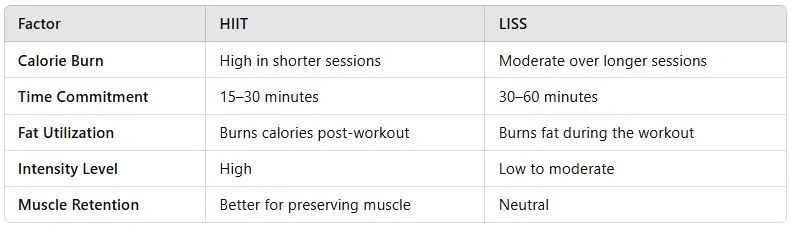
Choosing the Best Cardio for You
- If You’re Short on Time: Choose HIIT for quick, intense workouts that maximize calorie burn.
- If You’re a Beginner: Start with LISS to build endurance and ease into a routine.
- If You Want Variety: Mix both! Alternate between HIIT and LISS throughout the week to keep your routine fresh and effective.
- If You’re Focused on Muscle Retention: Incorporate HIIT alongside strength training.
A Sample Weekly Plan
Monday: 20-Minute HIIT Session (e.g., sprints and walking intervals).
Tuesday: 45-Minute LISS Session (e.g., brisk walking or cycling).
Thursday: 20-Minute HIIT Session (e.g., jump squats and push-ups).
Saturday: 60-Minute LISS Session (e.g., steady jog or swimming).
FAQ: Your HIIT vs. LISS Questions, Answered
Q: Which one burns more belly fat?
A: Neither spot-reduces fat. Fat loss occurs systemically. However, HIIT may be more effective at reducing visceral fat (the deep belly fat linked to health risks) due to its intense hormonal and metabolic impact. The best method for losing belly fat is the one you can adhere to consistently while maintaining a calorie deficit.
Q: Is it true that LISS burns a higher percentage of fat during the workout?
A: Yes, but this is often misunderstood. At lower intensities, your body uses a higher percentage of fat for fuel. However, at higher intensities (HIIT), you burn more total calories and more fat calories overall in the same timeframe, even if the percentage from fat is lower. Total calorie burn is more important for fat loss than the fuel source percentage during exercise.
Q: Can I do HIIT every day?
A: No. HIIT places high stress on your nervous system and muscles. Doing it daily leads to overtraining, injury, and burnout. Limit intense HIIT to 2-3 non-consecutive days per week. On other days, opt for LISS, strength training, or rest.
Q: I’m new to exercise. Should I start with HIIT or LISS?
A: Start with LISS. Build a base of cardiovascular fitness, joint resilience, and the habit of consistent exercise for 4-6 weeks. Then, carefully introduce short, low-impact HIIT intervals (e.g., 30 sec fast walk/60 sec slow walk) once a week.
Q: How do I know if I’m in the right intensity zone for each?
A: For LISS, you should be able to hold a conversation comfortably (the “talk test”). For HIIT, your work intervals should feel like an 8-9 out of 10 effort, where speaking more than a word or two is impossible. Using heart rate zones (LISS: 60-70% max HR; HIIT peaks: 80-90%+) is more precise.
The Bottom Line
Both HIIT and LISS are effective for fat loss, but the best choice depends on your goals, preferences, and lifestyle. By incorporating a mix of both, you can enjoy the benefits of variety, stay motivated, and optimize your results.
This article is based on my personal experiences and opinions. It is not intended as medical advice or a substitute for professional guidance. Always consult a qualified professional or healthcare provider for personalized advice regarding your health and wellness.
Share :

