

Quick Take
- Overtraining is a state of chronic fatigue and performance decline caused by inadequate recovery, not just being tired after a hard workout.
- Key physiological signs include a persistently elevated resting heart rate, unrelenting muscle soreness, and a weakened immune system leading to frequent illness.
- Mental and emotional symptoms like loss of motivation, mood swings, and sleep disturbances are critical indicators of hormonal and nervous system imbalance.
- Recovery requires strategic rest, nutritional support, and a reduced training load, with structured guidance from platforms like BeeFit.ai to prevent recurrence.
Exercise is essential for health, but the line between rigorous training and harmful overtraining is thinner than many realize. Overtraining syndrome occurs when the volume and intensity of exercise exceed your body’s capacity to recover, leading to a cascade of physical, emotional, and performance setbacks. Unlike normal fatigue, it’s a persistent state where more work leads to diminishing returns and potential harm.
Recognizing the early warnings is crucial for any dedicated individual. This guide details the ten most critical signs, backed by physiology, and provides a clear recovery roadmap to help you restore balance, protect your progress, and build a smarter, more sustainable approach to fitness.
How Do You Differentiate Overtraining from Normal Fatigue?
Direct Answer: Overtraining is characterized by a persistent decline in performance and well-being despite rest, whereas normal fatigue resolves with a day or two of recovery. It represents a systemic breakdown in your body’s adaptive capacity.
Explanation & Evidence
Normal training fatigue is a local, acute response that leads to supercompensation and growth. Overtraining is a chronic, systemic maladaptation of the neuroendocrine system, often involving dysregulation of cortisol and other stress hormones.
The Sleep Foundation notes that persistent exhaustion despite adequate sleep is a hallmark sign, indicating the body’s recovery systems are overwhelmed and cannot restore homeostasis.
Analysis & Application
Listen to trends, not just bad days. If your energy, mood, and performance are on a downward slope for more than two weeks despite attempted rest, it’s likely overtraining. This is where intelligent tracking and structured programming become invaluable to avoid the guesswork that leads to burnout.
What Are the Key Physical & Physiological Red Flags?
Direct Answer: Your body sends unambiguous signals through performance plateaus or regression, unshakable muscle soreness, an elevated resting heart rate (RHR), and a compromised immune system.
Explanation & Evidence
These signs indicate your central nervous system is fatigued, muscle tissue isn’t repairing, and your body is in a prolonged stress state.
- Elevated RHR: A sustained increase of 5-10 beats per minute upon waking suggests your sympathetic (“fight or flight”) nervous system is chronically activated.
- Frequent Illness: Intense, prolonged exercise increases cortisol and adrenaline, which can suppress immune cell function, making you more susceptible to infection.
Analysis & Application
Monitor your waking heart rate. Use a fitness tracker or manually check it each morning before getting out of bed. A consistent elevation is a clear cue to pull back. Similarly, view recurring colds or injuries not as bad luck, but as direct feedback that your training load is too high.
How Does Overtraining Manifest Mentally and Emotionally?
Direct Answer: Overtraining directly impacts brain chemistry, leading to sleep disturbances, loss of motivation, irritability, and feelings of depression—symptoms often mistaken for simple burnout or life stress.
Explanation & Evidence
The hormonal imbalance from chronic physical stress (high cortisol, potential drops in serotonin and dopamine) affects the same neurological pathways involved in mood regulation. The mental exhaustion is not a lack of willpower but a biochemical state.
Analysis & Application
Dreading workouts you once loved is a major red flag. Exercise should generally leave you feeling energized and positive. If it consistently leaves you drained, irritable, or anxious, your regimen needs immediate adjustment. This is a core reason why sustainable fitness requires balancing stress with recovery, a principle central to the expert-crafted plans at BeeFit.ai.
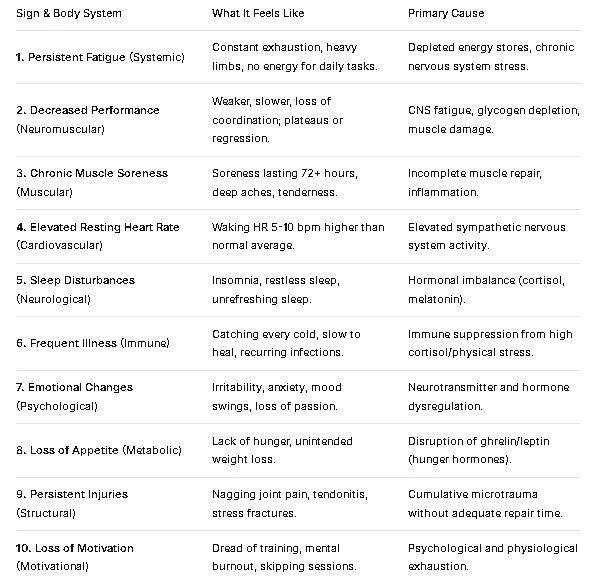
The 10 Critical Signs: A Diagnostic Checklist
Use this table to assess your current state. The presence of multiple signs strongly indicates overtraining.
What Is the Scientifically-Backed Recovery Protocol?
Direct Answer: Effective recovery from overtraining requires a multifaceted approach focused on stress reduction, nutritional support, and strategic activity—not just complete inactivity.
Explanation & Evidence
Recovery must address the root cause: systemic overload. A study in the Journal of Strength and Conditioning Research emphasizes that recovery is an active process involving managed stress, not just passive rest.
Analysis & Application
Follow this structured protocol:
- Take a Strategic Break: 3-7 days of complete rest or very gentle movement (walking, stretching).
- Prioritize Sleep & Nutrition: Aim for 8-10 hours of sleep. Focus on protein for repair, complex carbs to replenish glycogen, and healthy fats for hormone production.
- Reintroduce Activity Gradually: Start with 30-50% of your previous volume and intensity, focusing on technique and enjoyment.
- Seek Professional Guidance: A coach or physiotherapist can provide an objective assessment and a structured return-to-training plan. For a science-backed, balanced approach to rebuilding your fitness sustainably, explore the tailored resources available at BeeFit.ai.
Your Overtraining Recovery Questions, Answered
Q: How long does it take to recover from overtraining?
A: Recovery time varies widely based on severity. Mild cases may resolve in 1-2 weeks with proper rest. More severe, long-term overtraining can require several weeks to months of reduced activity. Patience is critical; rushing back guarantees relapse.
Q: Can I do any activity during recovery?
A: Yes, and you should. Active recovery like walking, leisurely cycling, swimming, or gentle yoga promotes blood flow and aids healing without adding significant stress. The key is keeping intensity very low and avoiding the exercises that led to overtraining.
Q: How can I prevent overtraining in the future?
A: Implement periodization—structuring your training into cycles with built-in deload weeks. Track objective metrics (performance, RHR, sleep quality) alongside subjective feelings. Most importantly, view rest and nutrition as non-negotiable components of the training program, not as interruptions to it.
Q: When should I see a doctor?
A: If symptoms are severe, include heart palpitations, significant depression, or do not improve after 2-3 weeks of dedicated rest and self-care. Consult a healthcare professional to rule out other medical conditions like thyroid issues, anemia, or clinical depression.
Overtraining is not a badge of honor; it is a sign that your methodology needs refinement. By learning to heed your body’s warnings—the elevated heart rate, the lingering soreness, the stolen motivation—you graduate from simply working hard to training smart. True fitness is built on the foundation of recovery. Embrace it, and you’ll build not just a stronger body, but a more resilient and sustainable practice.
For a personalized plan that balances intense effort with essential recovery, discover your free, expert-crafted fitness strategy at BeeFit.ai.
This article is for informational purposes only and is not a substitute for professional medical advice, diagnosis, or treatment. Always seek the advice of your physician or other qualified health provider with any questions regarding a medical condition.
Share :

