
BeeFit: Fitness & Wellness

Beyond Burnout: 5 Ways Your Body Manages Stress

Quick Take

  • Cortisol doesn’t just make you stressed—it can fundamentally alter your personality, turning confidence into aggression based on your hormonal environment.
  • Chronic stress physically reshapes your brain, enlarging the fear center (amygdala) while shrinking the memory center (hippocampus).
  • Simple, prolonged exhalation is your most powerful, accessible tool for directly activating the body’s built-in relaxation system.

Feeling overwhelmed isn’t just in your head—it’s a full-body biochemical event. We often approach stress as a mental battle, trying to think our way to calm. But what if the key to resilience isn’t about resisting pressure, but understanding the surprising ways your body is already trying to manage it? Modern, chronic stress hijacks ancient survival systems designed for short-term threats, turning powerful hormones and neural pathways against us.

This creates a paradox: the very mechanisms meant to protect us now fuel anxiety, brain fog, and exhaustion. At BeeFit.ai, we translate complex physiology into actionable insights. This article reveals five counter-intuitive, science-backed truths about how your body handles stress. By learning to work with—not against—these systems, you can move from simply surviving stress to helping your body recover from it.

1. Can a Stress Hormone Actually Change Your Personality?

Direct Answer: Yes. Cortisol, the primary stress hormone, acts as a master switch that can alter the effect of other hormones, fundamentally shifting behavior from confident leadership to reactive aggression.

Explanation & Evidence

The “dual-hormone hypothesis” shows that a hormone’s impact depends on its chemical context. Testosterone, for instance, doesn’t automatically cause aggression. Its effect is dictated by cortisol levels.

Research Insight: “In a group of primates, all the males may have similar levels of testosterone. It is the level of cortisol—high or low—that determines whether they become confident leaders or aggressive bullies.”

Analysis & Application

This reframes difficult behavior not as a fixed personality flaw, but as a physiological state of chronic threat. 

Your Application

View feelings of irritability or reactivity as a signal of elevated cortisol, not a character failure. The goal is to lower the chronic stress burden, which can positively influence your behavioral patterns.

2. Does Chronic Stress Physically Change Your Brain?

Direct Answer: Absolutely. Prolonged high cortisol causes measurable structural changes: it shrinks the hippocampus (vital for memory) and enlarges the amygdala (your brain’s fear center).

Explanation & Evidence

Stress isn’t just a feeling; it actively remodels your brain’s hardware. A shrinking hippocampus impairs memory and learning, while an enlarged amygdala lowers your threat threshold, making you hyper-vigilant and anxious. Furthermore, cortisol stifles the production of BDNF, a protein essential for brain plasticity and repair.

Analysis & Application

This explains the “brain fog” and irrational anxiety that accompany chronic stress your brain is literally being rewired for survival over reasoning. 

Your Application

Protect your brain by prioritizing activities proven to boost BDNF and counter these effects, such as aerobic exercise, learning new skills, and getting quality sleep. For more on sleep’s role, see our guide to sleep and recovery.

3. Why Does Stress Make Bad Habits Harder to Resist?

Direct Answer: Chronic stress creates a “dopamine trap” by increasing your susceptibility to addiction. It pushes the brain to seek quick, high-dopamine rewards to counterbalance feelings of misery and threat.

Explanation & Evidence

Dopamine drives motivation and pursuit. Modern life’s constant stimulation leads to “dopamine tolerance,” requiring more intense stimuli for the same feeling. High cortisol exacerbates this, creating a vicious cycle where stress increases cravings for sugary food, social media, or other quick hits.

Analysis & Application

What looks like a lack of willpower is often a stressed-out brain seeking chemical relief. 

Your Application

Instead of sheer resistance, address the root cause by lowering cortisol. Increasing oxytocin, the “bonding hormone” that inhibits cortisol, through real social connection is a powerful way to break the cycle.

4. Is Good Stress a Real Thing?

Direct Answer: Yes. Acute, short-term stress (eustress) is not only normal but beneficial. It trains your body’s resilience systems, much like a vaccine trains the immune system.

Explanation & Evidence

Your body operates on homeostasis, dynamically adapting to challenges. Short, intense stressors like a hard workout, a cold plunge, or a challenging work project trigger a sharp, wave-like rise and fall in cortisol. This allows the entire stress response system to reset, strengthening your ability to handle future stress.

Analysis & Application

Avoiding all stress is neither possible nor healthy. The goal is to swap chronic distress for beneficial acute stress. 

Your Application

Intentionally incorporate short, manageable stressors into your week. This could be high-intensity interval training, public speaking, or learning a physically challenging new skill. These “stress vaccinations” build resilience.

5. What Is the Simplest, Fastest Way to Hack Your Stress Response?

Direct Answer: Master your exhale. Consciously prolonging your exhalation is the most direct method to activate your parasympathetic nervous system and dampen the stress response.

Explanation & Evidence

Your breath is directly wired to your vagus nerve, the command center of your “rest and digest” system. A long, slow exhale sends a powerful signal to deactivate “fight or flight” mode. The technique is beautifully simple and doesn’t require complex patterns.

Analysis & Application

You carry this built-in tranquilizer with you everywhere. 

Your Application

Forget complicated rules. When feeling overwhelmed, simply focus on making your out-breath longer and slower than your in-breath. Even 30 seconds of this can shift your nervous system state. Do this before reacting to a stressful email or to wind down before bed.

FAQ: Your Stress Physiology Questions, Answered

Q: If stress shrinks the hippocampus, is the damage permanent?
A: The brain is remarkably plastic. Reducing chronic cortisol and engaging in hippocampal-boosting activities like cardio exercise and meditation can support recovery and even regrowth in this region over time.

Q: How can I tell if my stress is “chronic” or just a busy period?
A: The key differentiator is recovery. Acute stress has a clear end and is followed by a period where your body and mind return to baseline. Chronic stress feels relentless, with no discernible recovery window, leading to persistent fatigue, irritability, and brain fog.

Q: Are supplements effective for lowering cortisol?
A: Some adaptogens like ashwagandha or phosphoserine may support the stress response, but they are adjuncts, not solutions. The most powerful levers are behavioral: sleep, breathwork, nutrition, and movement. Always consult a healthcare professional before starting supplements.

Q: Can you be too relaxed? Isn’t some stress necessary for motivation?
A: Yes, as explored in the section on eustress. Complete absence of challenge leads to stagnation. The optimal state is a cycle of positive stress (engagement, challenge) followed by periods of genuine recovery and calm—a rhythm of effort and ease.

Becoming the Architect of Your Internal State

Understanding stress as a series of physiological processes is empowering. It moves the challenge from a vague mental struggle to a tangible set of systems you can influence. You are not at the mercy of your stress; you have multiple points of intervention—through your breath, your movements, your social connections, and your mindset.

Begin by observing your body’s signals without judgment, then choose one small, science-backed action to shift your chemistry. The path to resilience is built not by fighting your biology, but by collaborating with it.

What is one signal of stress you noticed in your body today, and which of these five levers will you use to address it?

This article is for informational purposes only and is not a substitute for professional medical advice, diagnosis, or treatment. Always seek the advice of your physician or other qualified health provider with any questions you may have regarding a medical condition.
Gut Reset, Better Mood: Your 7-Day Science-Backed Plan

Quick Take

  • A Stanford study found a diet high in fermented foods increased gut microbiome diversity and reduced key inflammatory markers in just 10 weeks.
  • Your healthy microbiome is unique to you; its stability is more important than specific bacteria.
  • Pro-inflammatory diets are strongly linked to a higher future risk of depression and anxiety.
  • This plan combines fermented foods, prebiotic fibers, and anti-inflammatory fats to reshape your gut ecosystem.

We often think of gut health as just about digestion—less bloating, more regularity. However, groundbreaking research reveals a far more profound truth: your gut is a command center for your entire well-being. The trillions of microbes in your gut, known as the microbiome, directly influence your immune system, stress resilience, and even your mood through the gut-brain axis.

At BeeFit.ai, we translate complex science into actionable health strategies. This 7-day plan moves beyond folklore to leverage the gut-brain connection. It’s a targeted, evidence-based reset designed to transform your inner ecosystem, sharpen your mind, and stabilize your emotions using the most compelling research from top-tier institutions.

Why Do Fermented Foods Outperform Plain Fiber for Gut Diversity?

Direct Answer: While both are crucial, a landmark Stanford study showed that a high-fermented-food diet rapidly increased microbiome diversity and lowered inflammation, whereas a high-fiber diet alone did not significantly change diversity in the short term.

Explanation & Evidence:
For years, fiber was the undisputed champion of gut health. However, a controlled clinical trial at Stanford School of Medicine revealed a nuanced truth. Researchers assigned participants to either a high-fiber or high-fermented-food diet for 10 weeks. The group eating yogurt, kefir, kimchi, and kombucha daily saw a direct increase in microbial diversity and a decrease in 19 inflammatory markers, including interleukin-6.

Research Insight: “This is a stunning finding,” said Justin Sonnenburg, PhD, an associate professor at Stanford. “It provides one of the first examples of how a simple change in diet can reproducibly remodel the microbiota across a cohort of healthy adults”.

Analysis & Application:
This challenges the “fiber-only” paradigm. The researchers suggest industrialized gut microbiomes may be so depleted that they need time—or direct microbial help—to recover. Fermented foods deliver a direct payload of beneficial microbes. Your Application: Make one or two fermented foods a daily non-negotiable during this reset.

Is There One “Perfect” Healthy Microbiome?

Direct Answer: No. Cutting-edge research confirms that a healthy microbiome is as personal as a fingerprint. The key marker of health is the stability of your unique ecosystem, not a specific bacterial profile.

Explanation & Evidence:
Stanford researchers tracking individuals for years found that the bacteria persisting best in a person’s microbiome were those most particular to the individual. During health, the microbiome remained stable; during illness or the onset of conditions like type 2 diabetes, it fluctuated wildly.

Research Insight: “We’re moving toward this idea that we have a personal microbiome that is incredibly important for our own metabolic and immune health… The microbiome varies enormously between people,” said Professor Michael Snyder, director of the Stanford Center for Genomics and Personalized Medicine.

Analysis & Application:
This closes the door on seeking a universal “ideal” gut flora and emphasizes personalized nutrition. Your Application: Use this 7-day plan as a personal experiment. Note which fermented foods and fibers make you feel more energetic and resilient.

Can Food Really Influence Anxiety and Depression?

Direct Answer: Yes. Large-scale studies show a pro-inflammatory diet is a significant modifiable risk factor for developing depression and anxiety, while an anti-inflammatory diet is protective.

Explanation & Evidence:
Chronic, low-grade inflammation is a hidden driver of mental health challenges. A 2024 study following nearly 190,000 people for over 14 years found a clear gradient: those with diets scoring higher on the pro-inflammatory Dietary Inflammatory Index had a markedly increased risk of developing depression and anxiety disorders.

Research Insight: Diets with pro-inflammatory traits “were strongly linked to an increased risk of developing depression and anxiety in the future. An anti-inflammatory diet… may offer a promising protective approach”.

Analysis & Application:
This moves diet to a central role in mental health prevention via the gut-brain axis. Your Application: This reset is deliberately anti-inflammatory, rich in omega-3s from fatty fish, polyphenols from berries, and healthy fats from olive oil and nuts.

What’s So Special About Short-Chain Fatty Acids from Fiber?

Direct Answer: When gut bacteria ferment fiber, they produce short-chain fatty acids (SCFAs) like butyrate, crucial metabolic signals that reduce inflammation, support gut barrier health, and may positively influence brain function.

Explanation & Evidence:
SCFAs are potent signaling molecules, not just waste. They activate receptors on cells in your gut lining and immune system. Butyrate, for instance, is the primary fuel for gut lining cells and helps suppress inflammation.

Research Insight: “SCFAs have a profound effect on physiological processes… independent of delivering calories to the host”. For brain health, SCFAs “have anti-inflammatory properties and may influence brain function and behavior”.

Analysis & Application:
This is why the quality and variety of fiber matter. You’re feeding the microbial workers that produce essential health compounds. Your Application: This plan includes diverse prebiotic fibers from lentils, oats, asparagus, and garlic to nourish different bacteria and maximize SCFA production.

Your 7-Day Science-Backed Gut Reset Plan

This daily framework applies the research, prioritizing fermented foods, diverse prebiotics, and anti-inflammatory nutrients.

Day 1 – Introduce Ferments & Fiber
Breakfast: Greek yogurt with chia seeds, blueberries, and flax.
Lunch: Lentil soup with spinach and carrots.
Dinner: Baked cod with steamed broccoli and quinoa.
Key Rationale: Inoculate and feed. Live cultures from yogurt meet prebiotic fiber from lentils and berries to immediately support microbial diversity.

Day 2 – Build Blood Sugar Stability
Breakfast: Oatmeal with banana, pumpkin seeds, and cinnamon.
Lunch: Chickpea salad with arugula, olive oil, and lemon.
Dinner: Grilled chicken with roasted sweet potato and sautéed kale.
Key Rationale: Prevent inflammation spikes. Soluble fiber from oats and legumes promotes stable glucose, reducing a key inflammatory trigger.

Day 3 – Anti-Inflammatory Boost
Breakfast: Smoothie with spinach, berries, kefir, and flax oil.
Lunch: Quinoa bowl with roasted vegetables and avocado.
Dinner: Salmon with asparagus and brown rice.
Key Rationale: Direct inflammation modulation. Omega-3s from salmon and polyphenols from greens directly interfere with pro-inflammatory pathways.

Day 4 – Feed Diverse Bacteria
Breakfast: Sourdough toast with avocado and sauerkraut.
Lunch: Lentil curry with basmati rice.
Dinner: Turkey meatballs with zucchini noodles and tomato sauce.
Key Rationale: Increase microbial richness. A wide variety of plant fibers encourages a more complex, resilient gut community.

Day 5 – Hydration & Serotonin Support
Breakfast: Overnight oats with kiwi, pumpkin seeds, and almond milk.
Lunch: Grilled veggie wrap with hummus and leafy greens.
Dinner: Baked trout with roasted cauliflower and quinoa.
Key Rationale: Support gut-brain signaling. Kiwi aids serotonin precursor availability; zinc from seeds is crucial for neurotransmitter synthesis.

Day 6 – Gut Lining Support
Breakfast: Greek yogurt with blueberries and flax seeds.
Lunch: Miso soup with tofu and seaweed, with a side of edamame.
Dinner: Grass-fed beef stir-fry with bell peppers and bok choy.
Key Rationale: Provide repair nutrients. Compounds in bone broth and cooked vegetables support the repair and maintenance of the gut lining.

Day 7 – Reset & Reflect
Breakfast: Smoothie with kefir, spinach, banana, and flax oil.
Lunch: Chickpea stew with carrots and kale.
Dinner: Baked salmon with sweet potato mash and steamed broccoli.
Key Rationale: Consolidate gains. Reflect on changes in energy, mood, and digestion. Plan which 2-3 new habits to continue.

Gut Health Reset: Frequently Asked Questions (FAQ)

Q: I already eat a high-fiber diet. Why aren’t I seeing gut health benefits?
A: The Stanford study suggests modern microbiomes may need time or direct microbial help to process increased fiber. Try combining your high-fiber intake with daily fermented foods like kefir or kimchi to provide the necessary microbes.

Q: What’s the most overlooked factor in gut health?
A: Stability over time. Health is less about specific “good bugs” and more about maintaining a stable, resilient personal microbiome. Consistent, diverse eating is better than drastic, frequent dietary swings.

Q: How quickly can diet change my gut microbiome?
A: Dietary changes can alter microbial communities within 24-48 hours. However, building a stable, diverse ecosystem that reduces inflammation takes consistent effort over weeks and months, as shown in the 10-week Stanford trial.

Q: Can improving gut health help with anxiety?
A: Emerging research strongly suggests a link. Since a pro-inflammatory diet is a risk factor for anxiety, an anti-inflammatory, microbiome-supporting diet is a promising strategy for supporting mental well-being via the gut-brain axis.

The science is clear: your gut is an active health command center. This 7-day reset is your practical blueprint to apply these insights. The goal is a thoughtful experiment to discover how feeding your unique microbial community can transform your energy, focus, and mood from the inside out.

Remember, profound health changes often begin not with a pill, but with a plate. For more science-backed strategies to optimize your wellness, explore our other articles on BeeFit.ai.

This article is for informational purposes only and is not a substitute for professional medical advice, diagnosis, or treatment. Always seek the advice of your physician or other qualified health provider with any questions you may have regarding a medical condition. The dietary plan provided is a general guide and may not be suitable for all individuals, particularly those with specific food allergies, intolerances, or medical conditions such as IBD or SIBO.
5 Brutal Truths About Building Mental Toughness

Quick Take

  • Stop waiting for motivation; true power is in action, especially when you don’t feel like it.
  • Sustainable drive comes from running from a past self you despise (the “stick”), not just chasing rewards (the “carrot”).
  • Neuroscience shows willpower grows only by doing things you genuinely hate, not just hard things you enjoy.
  • Winning the internal war requires building a dominant “second voice” to defeat your default inner critic.
  • Unshakable confidence is forged in solitude through “unseen work,” creating an internal reserve to draw from.

In a world saturated with life hacks and the endless search for a motivational spark, we’re conditioned to seek an easier path. We want the secret that will finally unlock our potential without the struggle. The message is clear: find your passion, get motivated, and the hard work will feel easy.

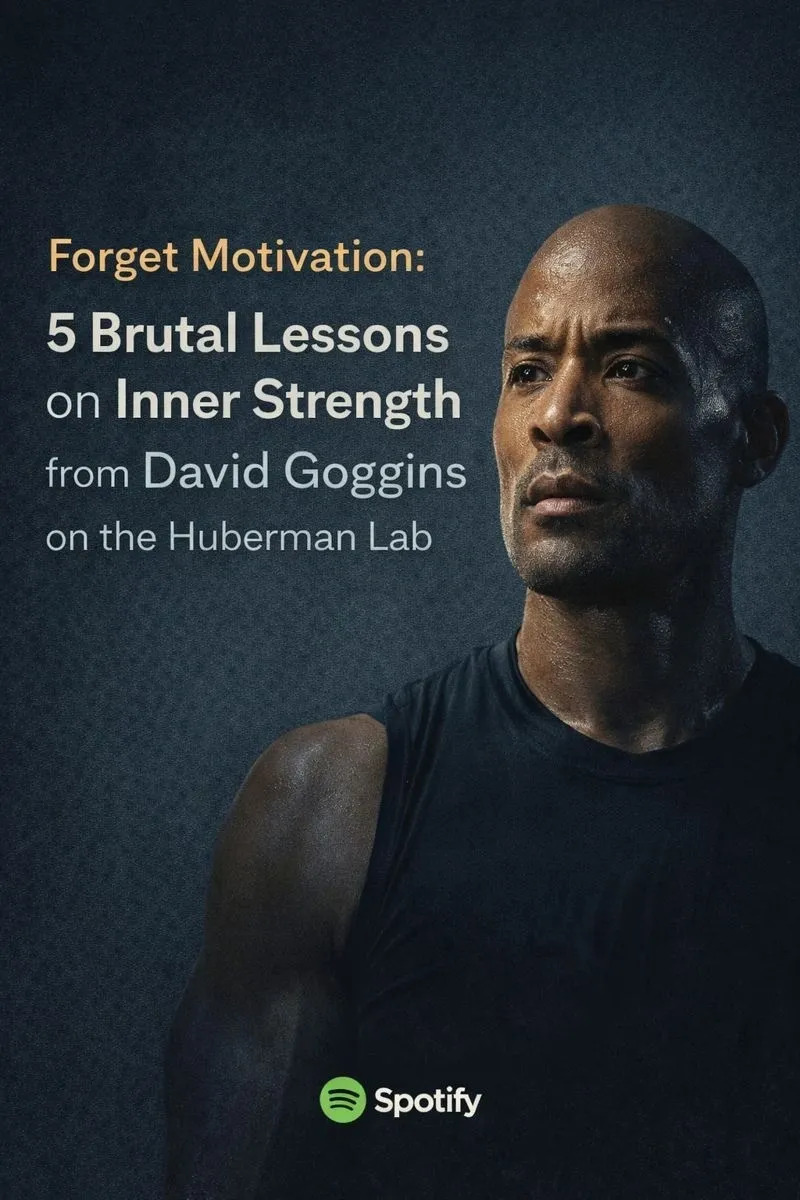
Then there’s the conversation between David Goggins and neuroscientist Andrew Huberman on the Huberman Lab podcast a session that serves as a radical demolition of this entire way of thinking. What makes their dialogue so potent isn’t just Goggins’s raw testimony; it’s the interplay between his brutal life experience and Huberman’s scientific frameworks. Huberman provides the neurological blueprint, and Goggins populates it with the visceral reality of a man who forged himself in fire.

Their core message is a direct assault on the comfort-seeking mindset: true, unshakable strength isn’t found in passion or positive thinking. It’s forged in the dark, by embracing the very friction we spend our lives trying to avoid. Here are the five most impactful lessons from their discussion that will change how you think about building inner strength.

1. Are You Addicted to Motivation?

Direct Answer: Yes, and it’s holding you hostage. Waiting for motivation or passion is a trap that makes your feelings the boss, guaranteeing a life of mediocrity. Power lies in decoupling action from emotion.

Explanation & Evidence:
Goggins argues that the modern pursuit of passion creates a false expectation that the path to growth should feel good. His reality is the opposite: the path is often a “nightmare,” and accepting this is the first step. He dismisses the words we cling to as flimsy excuses that keep us from the real work.

“There’s no fucking passion. There’s no fucking motivation… All those words are overused. They’re bullshit. It’s all bullshit. Just do.”

Analysis & Application:
This is a fundamental rewiring of your operating system. Stop asking “Do I feel like it?” Your goal is to build a identity of someone who acts regardless of feeling. Start by choosing one small, daily task you know you should do but often avoid (like a morning cold shower or a postponed chore). Do it immediately, without a single second of mental negotiation. This breaks the addiction to the right “feeling.”

2. Is Your Drive Built on a Carrot or a Stick?

Direct Answer: If you’re relying on rewards and positive visualization alone, your drive is fragile. The most sustainable engine is often the “stick” the relentless need to run from a past or potential self you fear becoming.

Explanation & Evidence:
Huberman introduces the classic psychological model of motivation: chasing a reward (carrot) versus avoiding a punishment (stick). Goggins confirms his engine is almost entirely the stick. He isn’t running toward a finish line of happiness; he’s running from the 300-pound, insecure man he used to be a ghost that haunts him to this day.

“That haunting is something that’s still there today because no matter how much you improve… it’s not permanent… Because once it turns off, I go right back to the David Goggins that is.”

Analysis & Application:
Reframe your goal-setting. Beyond chasing a promotion or a physique, define what you are running from. What version of yourself lazy, complacent, weak are you refusing to go back to? Write it down. Let that image fuel you when the “carrot” of future success feels too distant. The prize is surviving another day without becoming that person.

3. What’s the Only Real Workout for Willpower?

Direct Answer: Doing things you genuinely hate. Neuroscience reveals that the brain’s willpower center, the anterior mid-cingulate cortex (aMCC), grows only when you engage in tasks you are highly resistant to.

Explanation & Evidence:
This is the stunning scientific validation of Goggins’s philosophy. Huberman explains that the aMCC, a key region for tenacity and will, expands specifically through the friction of unwanted activity. A difficult task you enjoy does not produce the same growth.

“It was never about running. Why do you think I run? It’s the worst thing. I hate doing it more than anything. Hence the willpower.”

Analysis & Application:
Audit your “hard” routine. Is it filled with challenges you’ve learned to enjoy? To build real willpower, you must integrate a true “soul hate” task. It could be burpees, cold calls, or deep work on a tedious project. The key is the active resistance you feel. Do it not for the result, but for the neurological stressor. This is the only way to make your willpower bulletproof.

4. How Do You Win the War Inside Your Head?

Direct Answer: Not by silencing your inner critic, but by building a stronger, more dominant “second voice” to defeat it in daily battle. Your mind is a battlefield, not a meditation retreat.

Explanation & Evidence:
While many practices aim to quiet the mind, Goggins advocates for active, daily warfare. He describes the necessity of creating a second, commanding voice to combat the default voice of comfort and insecurity. Most people, he says, only have one voice telling them they’re not good enough.

“The winning voice is the second voice. They have one voice. And that’s just, “I’m a piece of shit” And that’s all they hear.”

Analysis & Application:
Stop trying to mute the negative self-talk. Instead, prepare for battle. When the first voice says “You can’t” your second voice must have a prepared, evidence-based counter: “I can, because I did it last Tuesday when I was more tired.” Cultivate this second voice by writing down past victories. Its strength comes from a resume of real proof, not empty affirmation.

5. Where is Unbreakable Confidence Actually Forged?

Direct Answer: In the solitude of the “unseen work”. True confidence is a private resume of suffering and accomplishment, an internal “medicine cabinet” you fill alone. When crisis hits, you draw from this reserve, not from external validation.

Explanation & Evidence:
Goggins argues that the work no one sees the early mornings, the extra reps, the personal trials builds an internal pharmacy of power. Huberman’s metaphor of the “medicine cabinet” perfectly captures this: you stock it drop by drop with every private victory. This creates a self-reliance so potent you need no external crutches.

“That is what motivates David Goggins is the unseen work. But everybody needs that pat on the back… I don’t need that shit. And neither do they.”

Analysis & Application:
Identify your external crutches: the pre-workout, the hype music, the accountability partner. Now, deliberately create a session where you remove them. Go for a run in silence. Train without caffeine. Tackle a project without telling anyone. These acts of solo fortitude stock your internal medicine cabinet. Build a supply so vast that your need for external motivation withers away.

Your Inner Strength Questions, Answered

Q: This sounds incredibly intense. Is it sustainable or a path to burnout?
A: It is a lifelong practice, not a short-term blast. The key is integrating these principles at a sustainable level. The “unwanted task” for willpower could be 10 minutes, not 2 hours. It’s about consistent engagement with friction, not total self-destruction. Recovery remains critical, but recovery is not comfort, it’s strategic replenishment for the next battle.

Q: How do I start if I’m not a former Navy SEAL?
A: You start exactly where Goggins did: with one small callous. Your first mission is to find the smallest, most immediate point of friction you’ve been avoiding a cluttered drawer, an uncomfortable email, a skipped workout and attack it right now. Do not plan to start tomorrow. The philosophy is built on the micro-battles you win in this moment.

Q: Doesn’t a “stick”-based mentality lead to a negative self-image?
A: It’s not about self-hatred; it’s about a ruthless commitment to not going backward. The fuel is a hatred of a former self or a potential lesser self, not your current self. It’s the difference between “I am worthless” (destructive) and “I will never be that version of me again” (propulsive). The second voice you build should be rooted in respect for your current effort.

Q: Can I use both “carrot” and “stick” motivation?
A: Absolutely. The lesson is that the “stick” is often the more reliable and powerful engine, especially when things get hard. Most people underutilize it. A robust system uses the vision of the future (carrot) as a guide, but the relentless rejection of backsliding (stick) as the daily fuel.

The Never-Ending Hunt

The central theme from Goggins and Huberman is that unbreakable strength is not discovered; it is built. It is not a gift found in comfort, but a skill forged in friction. It requires you to weaponize your discomfort, make peace with a permanent internal war, and find your power in the solitary, unseen work.

This path does not promise happiness—it promises ownership. You stop being a passenger waiting to feel motivated and become the driver who commands action. The journey doesn’t get easier. But, as Goggins says, through this relentless process, you are always found.

What is the one thing you’ve been negotiating with yourself about that you will simply do today? The door to the dungeon is open. The only question is if you will choose to turn the key.

Ready to build more mental resilience? Explore our foundational guides on habit formation and the science of consistency at BeeFit.ai.

This article is for informational purposes only and is not a substitute for professional psychological or medical advice.

How I Fixed My Terrible Sleep with 6 Science-Backed Habits

Quick Take

  • Achieve perfect sleep by adopting the identity of a “professional sleeper,” making rest your non-negotiable top priority.
  • Finish your last meal shockingly early (e.g., by late morning) to allow complete digestion before bed, drastically improving sleep quality.
  • Engineer a sacred sleep environment with social contracts and a bedroom used only for sleep, and consider the data-backed benefits of sleeping alone.
  • Anchor your circadian rhythm with 10,000 Lux light upon waking and use objective sleep data tracking as your most important tool for optimization.

The search for perfect sleep often leaves us counting sheep and following standard advice, yet high-quality rest remains elusive. What if the problem isn’t the tips, but our entire philosophy? What if we stopped hoping for good sleep and started actively engineering it like a professional skill?

Tech entrepreneur and biohacker Bryan Johnson, who claims a record of “8 months of perfect sleep,” has done exactly that. His regimen represents a complete paradigm shift from viewing sleep as passive downtime to treating it as the foundational skill of human performance. This article distills the most impactful and adaptable rules from his system, offering a blueprint to fundamentally redesign your relationship with rest.

Habit 1: Why Should You Call Yourself a “Professional Sleeper”?

Direct Answer: Adopting the identity of a “professional sleeper” is the essential mental shift that redefines sleep from a negotiable compromise into your single most important non-negotiable daily task.

Explanation & Evidence:
Johnson argues that mainstream “grind culture” treats sleep as a weakness, symbolized by toxic mantras like “money never sleeps.” This mindset ensures sleep is always the first sacrifice to other demands. The professional sleeper flips this script, scheduling life around sleep, not sleep around life.

The benefit of this shift is profound and tangible: “you will feel better, you will look better, and everything in life will be easier.” This identity change alters every subsequent decision about evening routines, diet, and social commitments.

Analysis & Application:
Start by verbally reframing your priority. Say, “I’m a professional sleeper, so I need to finish dinner early,” or “I protect my 10 p.m. bedtime.” This isn’t just semantics; it’s a cognitive tool that empowers you to make choices aligned with deep rest, a principle that aligns with building foundational health habits at BeeFit.ai.

Habit 2: Is an 11 A.M. Last Meal the Extreme Secret to Better Sleep?

Direct Answer: While extreme, Johnson’s shockingly early last meal (11 a.m.) highlights the critical principle that late, heavy digestion is a major sleep disruptor. The actionable rule is to finish eating at least 3-4 hours before bedtime.

Explanation & Evidence:
Through rigorous self-experimentation, Johnson found that large meals close to bedtime force the body to focus on digestion instead of restoration. This can lead to fragmented sleep, lower sleep quality, and impaired overnight detoxification and repair processes.

Analysis & Application:
You don’t need to eat lunch as your last meal. Experiment by moving your dinner earlier by 60 minutes each week. If you must eat late, make the meal very light mostly vegetables and lean protein. This gives your body the clear signal that it’s time to shift from digestion to regeneration.

Habit 3: How Do You Engineer a “Sacred” Sleep Sanctuary?

Direct Answer: You engineer a sleep sanctuary through explicit social contracts and a strict single-purpose rule for your bedroom, transforming it from a multi-use room into a dedicated temple for rest.

Explanation & Evidence:
Johnson treats sleep as a “team sport.” He created a “family contract” where he and his son playfully “run to our bedtimes.” He even called a neighbor to resolve a noise issue, creating a “community contract.” The most critical rule is physical: “I do nothing in my bedroom except for sleep. I don’t read in there, I don’t watch movies, I don’t hang out.”

Analysis & Application:
Start with the physical contract. Remove TVs, laptops, and clutter. Use the room only for sleep and intimacy. Then, communicate your “sleep rules” to housemates or partners. This proactive design eliminates decision fatigue and environmental stressors, making good sleep the default, automatic outcome.

Habit 4: Is the “Controversial” Advice to Sleep Alone Actually Logical?

Direct Answer: Yes, from a pure sleep optimization standpoint. Johnson suggests sleeping alone because synchronizing sleep patterns with a partner is inherently difficult, and the resulting “wake events” from movement, temperature differences, or snoring objectively degrade sleep quality for both people.

Explanation & Evidence:
He acknowledges this is “a little bit controversial,” but presents it as a logical consideration for those seeking the highest possible sleep quality. The goal is to minimize all disruptions, and a partner is a common source of unintentional sleep interruptions.

Analysis & Application:
For couples, this doesn’t have to be absolute. Consider “sleep divorces” on weeknights or investing in a larger bed with motion-isolating mattresses. The key takeaway is to honestly assess if sharing a bed is harming your sleep and to have a pragmatic conversation about solutions, prioritizing the health of both individuals.

Habit 5: Why Does Your Morning Light Routine Dictate Your Night?

Direct Answer: Exposure to 10,000 Lux of light within minutes of waking is the most powerful signal to anchor your circadian rhythm, ensuring a consistent sleep drive later that night and regulating key hormones like cortisol and melatonin.

Explanation & Evidence:
Johnson uses a 10,000 Lux light panel first thing in the morning. This intense light exposure suppresses melatonin and cues the body’s internal clock that the day has begun, promoting alertness and setting a reliable countdown to sleepiness roughly 14-16 hours later.

Analysis & Application:
Invest in a verified 10,000 Lux therapy light or, even better, get 10-30 minutes of natural morning sunlight. Consistency is key do this even on weekends. This simple habit is a cornerstone of regulating your body’s natural energy cycles, much like the strategic habits in a well-designed morning routine for peak performance.

Habit 6: What Is the Most Important (Paid) Tool for Sleep Mastery?

Direct Answer: Objective data tracking is the ultimate tool. Johnson uses a Whoop band to move from guessing to knowing, revealing the direct cause-and-effect relationship between his daily behaviors and his sleep metrics.

Explanation & Evidence:
He saves this for last, emphasizing that you should master the free behavioral habits first. Data provides indispensable feedback: “It’s like saying, I’m going to train for a race but I’m not going to use a stopwatch.” You can see how alcohol, late meals, or stress directly impact your sleep depth and recovery.

Analysis & Application:
Use a sleep tracker (Oura Ring, Whoop, Apple Watch) for at least one month. Don’t obsess over nightly scores; look for trends. How does your sleep change when you exercise, eat late, or drink alcohol? This turns sleep from a mystery into a manageable variable, allowing for precise, personal optimization.

Your Sleep Optimization Questions, Answered

Q: I can’t possibly eat my last meal at 11 a.m. How strict do I need to be?
A: The principle is more important than the extreme example. Aim for a minimum 3-hour gap between your last bite and bedtime. Start by moving your dinner 30 minutes earlier each week. The goal is to stop digesting before you sleep, not to adopt an unsustainable regimen.

Q: Is a 10,000 Lux light safe, and what’s a good alternative?
A: Yes, when used correctly in the morning. A strong alternative is natural sunlight: get outside for 10-30 minutes within an hour of waking. Even on a cloudy day, outdoor light intensity far surpasses indoor lighting and effectively anchors your rhythm.

Q: My partner won’t agree to sleeping separately. What can I do?
A: Optimize within the shared space. Use separate blankets to manage temperature, try white noise to mask disturbances, and choose a mattress that minimizes motion transfer. The key is open communication focused on mutual health, not blame.

Q: I’ve tried everything and still can’t sleep. What’s the next step?
A: Consistent sleep difficulties may indicate an underlying issue like sleep apnea, anxiety, or a circadian rhythm disorder. Consult a healthcare provider or a sleep specialist. They can provide diagnostics and targeted treatment beyond lifestyle optimization.

Bryan Johnson’s system demonstrates that perfect sleep is not found, but built. It requires dismantling the cultural myth that rest is for the weak and embracing it as the ultimate performance enhancer. By engineering your environment, habits, and mindset with the precision of a professional, you transform sleep from a recurring challenge into your most reliable source of energy and vitality.

Ready to engineer the rest of your health and fitness with the same precision? Discover your personalized, data-informed strategy at BeeFit.ai.

This article is for informational purposes only and is not a substitute for professional medical advice. Always consult with a healthcare provider for any persistent sleep issues or before making significant changes to your lifestyle.

5 Surprising Cortisol Rules for Unlocking All-Day Energy

Quick Take

  • Cortisol’s primary role is the deployment of energy for your brain and body, not just causing stress.
  • Morning sunlight within an hour of waking can boost your cortisol peak by up to 50%, anchoring your daily energy rhythm.
  • Delaying morning caffeine by 60-90 minutes helps prevent the common afternoon energy crash by working with your natural cortisol curve.
  • Eating starchy carbs at night is linked to lower evening cortisol and may improve sleep quality, countering common diet myths.
  • The “physiological sigh”, a specific breathing pattern, is the fastest known science-backed tool to lower acute stress in real-time.

If you’ve ever felt “wired and tired”, exhausted but unable to unwind at night, you’ve likely blamed cortisol. For decades, this hormone has been cast as the villain, the “bad” stress hormone we must constantly lower. This common view misses a fundamental truth: cortisol is one of your body’s most critical tools for generating consistent, all-day energy and focus.

The key isn’t to eliminate cortisol, but to master its natural 24-hour rhythm. When correctly timed—high in the morning and low at night—cortisol transforms from a source of burnout into your most powerful ally for escaping the cycle of energy peaks and crashes. Grounded in neuroscience popularized by experts like Dr. Andrew Huberman, these five rules provide a science-backed framework for managing your energy with precision.

1. Why Is the ‘Stress Hormone’ Your Secret Weapon for Energy?

Direct Answer: Cortisol’s primary job is not to create stress, but to deploy energy in the form of glucose to your brain and body. It is the essential hormone that powers you out of bed, fuels focus, and drives physical performance.

Explanation & Evidence

We’ve been conditioned to see cortisol as something to avoid, but a healthy surge is vital for daily function. It’s the biochemical signal that tells your body to mobilize its fuel stores.

Neurobiologist Andrew Huberman reframes this common misunderstanding: “Cortisol is not a stress hormone per se. Cortisol should be thought of as a hormone that causes the deployment of energy into the body and helps direct that energy to particular tissues.”

Analysis & Application

The goal isn’t to lower cortisol at all times, but to time it correctly. You need a sharp, high peak in the morning to feel awake, followed by a steady decline to prepare for restful sleep. This reframing is the first step to taking control of your daily energy.

2. Can 10 Minutes of Morning Sun Really Boost Your Cortisol by 50%?

Direct Answer: Yes. Getting bright, natural light in your eyes within the first hour of waking is the most powerful tool for setting your daily rhythm and can increase morning cortisol by up to 50%, creating a robust energy peak.

Explanation & Evidence

This light sends a direct signal to your brain’s master clock, the suprachiasmatic nucleus (SCN), which triggers a sharp cortisol release. This peak is crucial because it effectively starts a timer for your entire daily cycle.

Research cited by Huberman Lab indicates this practice is so effective it’s used to offset seasonal depression and can “increase cortisol levels by up to 50%.”

Analysis & Application:
A higher morning peak triggers your body’s feedback loop to begin shutting down production later, leading to a smoother energy decline. Apply this by getting 5-10 minutes of outdoor light without sunglasses each morning. On cloudy days or before sunrise, a 10,000-lux light therapy lamp is a strong alternative.

3. Is Your Morning Coffee Causing Your Afternoon Crash?

Direct Answer: For regular drinkers, consuming caffeine immediately upon waking can blunt your natural cortisol rhythm and contribute to a steeper afternoon energy crash.

Explanation & Evidence

For habitual users, coffee doesn’t significantly raise morning cortisol. Instead, it prolongs the effects of the cortisol already present. By drinking it immediately, you interfere with the body’s natural peak-and-decline sequence.

Analysis & Application

Delay your first coffee by 60-90 minutes after waking. This allows your natural cortisol peak to occur unimpeded. Introducing caffeine after this peak helps create a more gradual decline in energy, preventing the sharp 3 PM crash. This makes caffeine a tool for shaping your energy curve, not just a wake-up trigger. For more on strategic nutrition timing, see our guide on Building Your Foundational Supplement Stack.

4. Could Eating Carbs at Night Be the Secret to Better Sleep?

Direct Answer: Consuming a serving of starchy carbohydrates with your evening meal is linked to lower cortisol levels, which can support relaxation and improve sleep onset—directly countering the myth to avoid night-time carbs.

Explanation & Evidence

Since cortisol’s role is to release glucose, providing your body with a direct source from carbs reduces the need for cortisol to be secreted. This helps maintain a calmer biochemical state in the evening.

As Huberman explains, “When your blood glucose levels are elevated, your cortisol levels tend to stay low as well because it’s not as readily released.”

Analysis & Application

Incorporate a serving of foods like rice, sweet potato, or oats into your last meal. This nutritional tweak aids your body’s natural wind-down process, paving the way for deeper, more restorative sleep. For a comprehensive approach, explore our article on Express Workout for Busy Schedules to balance activity and recovery.

5. What’s the Fastest Way to Lower Stress in Real-Time?

Direct Answer: The “physiological sigh”, a pattern of a double inhale through the nose followed by a long, extended exhale through the mouth, is the fastest known method to calm your nervous system and lower acute stress.

Explanation & Evidence

This specific pattern maximizes lung inflation and carbon dioxide offloading, which has an immediate effect on your heart rate and autonomic state, shifting you from “fight-or-flight” to “rest-and-digest.”

The technique is simple: “a big deep inhale through your nose then a second sharp inhale to try and maximally inflate your lungs and then a long exhale until your lungs are empty.”

Analysis & Application

This is a free, powerful tool you can use anywhere. When you feel stress rising, take one to three physiological sighs to regain control. It’s especially useful in the evening to keep cortisol low and prepare for sleep.

Your Cortisol & Energy Questions, Answered

Q: What’s the single most important factor for a healthy cortisol rhythm?
A: The timing and quality of your morning cortisol peak. A sharp peak, best achieved through morning light exposure, anchors your entire 24-hour cycle, ensuring a smooth decline that supports daytime energy and nighttime rest.

Q: Does exercise ruin your cortisol levels?
A: Not at all. While a novel, intense workout temporarily raises cortisol, regular exercise at a consistent time reinforces a healthy rhythm. Your body even learns to create a small, anticipatory rise in cortisol before your usual workout, priming you for performance.

Q: Can food really impact cortisol?
A: Yes, potently. Compounds in grapefruit can slow the breakdown of cortisol, extending its effects. Conversely, real black licorice (containing glycyrrhizin) can significantly increase cortisol and should be used cautiously, especially by those with high blood pressure.

Q: What are the signs of cortisol-related burnout?
A: Watch for two patterns: 1) Waking with anxiety followed by a severe afternoon crash, or 2) Feeling sluggish all morning but becoming “wired and tired” at night, unable to sleep despite exhaustion. Both indicate a disrupted cortisol rhythm.

Mastering your daily energy is a matter of biology, not luck. By understanding cortisol as your energy deployment system and learning to conduct its rhythm with light, food, and breath, you take direct control over your focus, mood, and resilience. Start by applying one of these science-backed rules today to begin unlocking consistent, all-day vitality.

For more evidence-based strategies to optimize your health and performance, explore the tools and resources at BeeFit.ai.

This article is for informational purposes only and is not a substitute for professional medical advice. Always consult with a healthcare provider for personal health concerns.

Beat the Winter Slump: 7 Science-Backed Ways to Boost Your Energy

Quick Take

  • Light therapy can directly reset your biological clock, balancing melatonin and serotonin levels disrupted by shorter winter days.
  • Prioritizing 7+ hours of sleep is non-negotiable; winter’s cold can disrupt sleep, making a consistent, cool sleep environment key.
  • Exercise is a proven energy catalyst, with studies showing structured activity significantly improves energy and reduces fatigue within weeks.
  • Social connection acts as a neurological energizer, triggering the release of endorphins that boost mood and vitality.

As the days shorten and temperatures drop, do you find yourself feeling more like a hibernating bear than your usual vibrant self? You’re not imagining it. That pervasive fatigue and craving for carbs are common winter woes, driven by real physiological changes.

Shorter daylight hours disrupt your circadian rhythm, increase sleep-regulating melatonin, and can lower mood-boosting serotonin. Coupled with a natural tendency to move less, it’s a recipe for an energy crash. But this seasonal slump isn’t a life sentence. By understanding the why, you can implement targeted, effective strategies to reclaim your vitality.

This guide moves beyond generic advice to offer seven data-backed methods, from harnessing the power of light to leveraging the energizing effect of community, so you can thrive all winter long.

1. Can a Special Lamp Really Give You More Energy?

Direct Answer: Yes, light therapy is a clinically-supported method to boost winter energy by directly correcting the sunlight deficit that disrupts your body’s internal clock and hormone balance.

Explanation & Evidence:
Light therapy boxes emit bright, full-spectrum light that mimics sunlight. This light enters your eyes and signals your brain’s pineal gland to suppress the production of melatonin (the sleep hormone) and encourage the production of serotonin (a key hormone for mood and energy).

Research on Seasonal Affective Disorder (SAD) highlights that “using a light therapy box… can not only help relieve symptoms of SAD but also boost your energy levels,” even for those without a formal diagnosis.

Analysis & Application:
This isn’t just about feeling awake; it’s about resetting your core biology. For best results, use a 10,000-lux light box for about 20-30 minutes each morning. Place it on your desk or breakfast table so you can absorb the light while you start your day. Think of it as a potent, non-caffeinated morning coffee for your nervous system.

2. Is More Sleep the Answer to Winter Fatigue?

Direct Answer: Absolutely. Prioritizing at least seven hours of quality sleep addresses the body’s increased demand for rest in winter and counteracts the energy-sapping effects of sleep deprivation.

Explanation & Evidence:
Your body naturally craves more sleep in the darker months. Ignoring this need creates a deficit that directly impacts cognitive function, mood, and immune health, leaving you drained.

Performance dietitian Steph Magill, MS, RD, CD, FAND, explains, “Lack of sleep can affect your focus, mood, and your immune system, making you feel tired and sluggish.”

Analysis & Application:
The surprising key here is temperature. A room that’s too warm (common in winter) can significantly impede sleep quality. Aim for a cool, but not cold, sleep environment—around 65°F (18°C) is ideal for most people. Establish a consistent wind-down routine to signal to your body that it’s time to rest deeply.

3. How Can Exercise Boost Energy When I’m Already Tired?

Direct Answer: Regular physical activity increases blood flow, oxygen delivery, and metabolism while releasing endorphins, making it one of the most reliable ways to generate energy, not just use it up.

Explanation & Evidence:
Exercise counteracts the sedentary winter slump that directly contributes to low energy. It’s a potent stimulant for both body and brain.

A study on fatigued employees found that a structured, six-week exercise program led to “vast improvements in their energy levels, sleep quality, and cognitive function.”

Analysis & Application:
The barrier is often starting. The solution is to reframe exercise as an energy investment. You don’t need a grueling gym session. A brisk 20-minute walk, a short online yoga class, or a quick bodyweight circuit can trigger the endorphin release that energizes you for hours. Consistency trumps intensity. For ideas, explore our guide on Quick Home Workouts for Busy Schedules.

4. Does Winter Comfort Food Drain Your Energy?

Direct Answer: It can. A diet heavy in simple carbs and sugars leads to energy crashes, while a balanced diet with complex carbs, protein, and healthy fats provides sustained fuel.

Explanation & Evidence:
Winter often brings cravings for calorie-dense, less nutritious foods. However, poor nutrition can cause hormonal imbalances and a sluggish metabolism.

Magill advises focusing on “foods rich in fiber, vitamins and minerals,” and prioritizing “complex carbohydrates, protein, and healthy fats” for stable energy.

Analysis & Application:
You don’t have to give up comfort food. Instead, build a nutritious base. Start your day with a protein-rich breakfast (like eggs or Greek yogurt), incorporate veggies and lean protein into every meal, and stay hydrated. This balance ensures your body has the raw materials to produce steady energy, making room for the occasional treat without a major crash.

5. Can Helping Others Actually Energize You?

Direct Answer: Yes. Acts of volunteering and kindness activate the brain’s reward center, releasing serotonin, dopamine, and endorphins—a chemical combo that directly boosts mood and energy.

Explanation & Evidence:
Altruism has measurable neurochemical benefits. This “helper’s high” can counteract stress and anxiety while providing a sense of purpose, which is especially valuable during isolating winter months.

Research suggests that “your body gets the same chemical benefits from volunteering that you would get from a good physical workout,” including a decreased risk of depression.

Analysis & Application:
The energy boost here is mental and emotional. Schedule a winter volunteer activity, like helping at a food bank or checking in on a neighbor. The social interaction and sense of accomplishment provide a powerful counter-narrative to winter lethargy, breaking the cycle of low energy and withdrawal.

6. How Do Social Connections Physically Combat Fatigue?

Direct Answer: Positive social interaction triggers the release of endorphins, the body’s natural feel-good chemicals that elevate mood and perception of energy, while combating isolation that worsens fatigue.

Explanation & Evidence: Laughter and connection are not just fun; they are biochemical events. One study found that social laughter triggered measurable endorphin release.

Licensed mental health counselor Melissa Miller, MS, MBA, LMHC, notes that staying connected “can provide a protective base” against the social withdrawal that often accompanies winter energy dips.

Analysis & Application: Make social plans and treat them as non-negotiable appointments for your well-being. A weekly coffee date, a phone call with a friend, or a game night can be as crucial for your winter energy as any supplement. The connection literally changes your brain chemistry.

7. Could a Vitamin Deficiency Be Causing Your Slump?

Direct Answer: Very likely. Deficiencies in Vitamin D (from lack of sunlight) and Vitamin B12 (key for converting food to energy) are common culprits behind persistent winter fatigue.

Explanation & Evidence: Vitamin D is essential for maintaining serotonin levels, which drop in winter. B12 is critical for nerve function and preventing anemia-related fatigue.

One study found that “supplementing with vitamin D had a direct impact on a person’s energy levels,” highlighting the importance of addressing this common seasonal deficiency.

Analysis & Application: Don’t self-prescribe high doses. If you suspect a deficiency, the most important step is to consult a healthcare provider. They can perform a simple blood test to identify specific shortages and recommend a safe, effective supplement plan tailored to you.

Your Winter Energy Questions, Answered

Q: What’s the single biggest reason for low energy in winter?
A: The disruption of your circadian rhythm due to reduced sunlight is the primary driver. It throws off melatonin and serotonin production, impacting both sleep quality and daytime alertness at a fundamental level.

Q: I get outside sometimes. Is a light box still necessary?
A: It can be, especially in northern latitudes. A light box provides a consistent, high-intensity dose of “sunlight” independent of weather, cloud cover, or your schedule, making it a reliable tool for serious energy slumps.

Q: How long does it take for these strategies to work?
A: Light therapy and exercise can yield noticeable improvements within a week or two. Correcting sleep and nutrition builds a foundation for sustained energy over time. Consistency is key with all methods.

Q: When should I see a doctor about winter fatigue?
A: If fatigue is severe, persists despite lifestyle changes, or is accompanied by feelings of hopelessness, it’s time to consult a professional. They can rule out underlying conditions like thyroid issues, sleep apnea, or clinical depression.

Conquering winter fatigue requires a strategic blend of biology and behavior. By using light to reset your clock, movement to spark your metabolism, nutrition to fuel your cells, and connection to lift your spirit, you transform the winter narrative from one of survival to one of vitality. Listen to your body’s need for rest, but empower it with the specific tools it needs to thrive in the season.

For personalized guidance on creating an energy-boosting winter plan, explore the tools and resources available at BeeFit.ai.

This article is for informational purposes only and is not a substitute for professional medical advice. Always consult with a healthcare provider before making any significant changes to your diet, exercise, or supplement regimen, especially for persistent fatigue.