
Quick Take
- Your stomach has sugar-sensing neurons that trigger dopamine release and cravings, independent of taste.
- The omega-3 fat EPA can be as effective as Prozac for some in managing depression, and works synergistically with it.
- Your brain subconsciously eats to acquire amino acids, tyrosine and tryptophan to produce dopamine and serotonin.
- Your gut microbiome is a neutral ecosystem; its composition, influenced by diet, directly affects anxiety and depression risk.
- Your beliefs about food can physically alter digestion, changing hunger hormone (ghrelin) levels based on perceived calorie content.
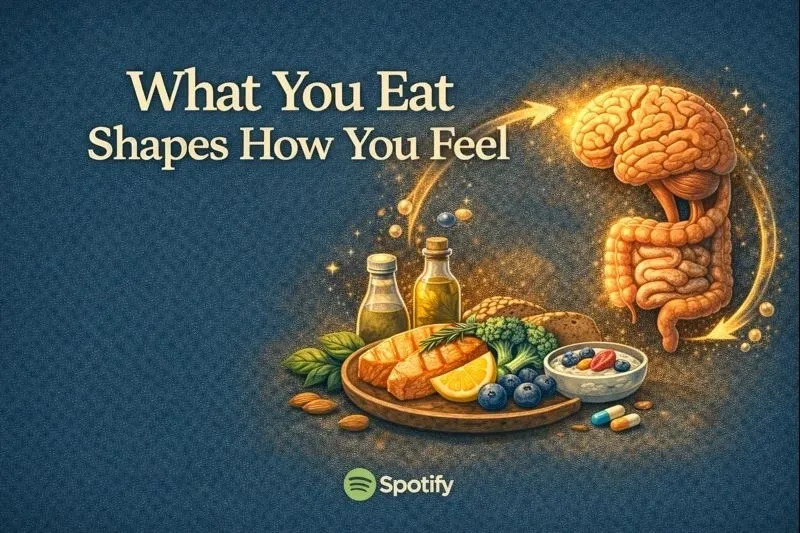
We often view our emotions as abstract, mental events. Yet, a growing body of science reveals a profound truth: your mood is a whole-body creation. The connection between what you eat and how you feel is not just philosophical but it’s a direct, biological dialogue known as the gut-brain axis.
This two-way communication superhighway links your emotional and cognitive centers with your digestive system. It explains why anxiety can cause a “gut-wrenching” feeling and why a troubled gut can send signals of stress to the brain. Your digestive tract is lined with over 100 million nerve cells, forming a “second brain” that is in constant conversation with the one in your head.
By understanding this conversation, you gain powerful levers to influence your mental state. Here are five surprising, evidence-based ways your body dictates your mood, and how you can actively participate in the dialogue.
1. Can You Crave Sugar Without Tasting It?
Direct Answer: Yes. Specialized neurons in your gut can detect sugar and directly signal your brain to release dopamine, driving craving and consumption—completely bypassing your taste buds.
Explanation & Evidence:
This pathway uses the vagus nerve, a major information highway between the gut and brain. In experiments where taste was neutralized, subjects still craved and consumed more of foods containing hidden sugars. This creates a subconscious “chemical gut feeling” that influences your choices.
“What this means is that even if a food is very savory… if there’s sugar snuck into that and you can’t taste it, you will still crave more of that thing without knowing that you crave it because it has sugar.”
Analysis & Application:
This insight shifts responsibility from willpower to awareness. To combat hidden cravings, become a label reader. Watch for added sugars in sauces, bread, dressings, and processed savory snacks. Prioritizing whole, single-ingredient foods is the most effective strategy to avoid this hidden biological pull.
2. Is There a Food-Based Alternative to Antidepressants?
Direct Answer: For some individuals, yes. Clinical research shows that the omega-3 fatty acid EPA (Eicosapentaenoic Acid) can be as effective as a common prescription antidepressant and may enhance its effects when combined.
Explanation & Evidence:
A landmark human study compared 1,000 mg of EPA to 20 mg of fluoxetine (Prozac) in individuals with major depression. The results were striking: EPA was equally effective, and the combination of both produced a superior outcome. This highlights diet’s direct role in brain chemistry. Omega-3s help reduce inflammation, which is often linked to mood disorders.
Analysis & Application:
While not a universal cure, this underscores diet as a foundational tool for mental health. You can increase EPA by eating fatty fish (like salmon, mackerel) 2-3 times per week. For therapeutic doses, a high-quality fish oil supplement standardized for EPA may be considered, ideally in consultation with a healthcare provider. It’s a powerful example of nutritional psychiatry in action.
3. Are You Eating for Your Stomach or Your Brain?
Direct Answer: You are primarily eating for your brain. Your brain drives you to consume food until it acquires enough specific amino acids—tyrosine and tryptophan—which are precursors for the crucial neurotransmitters dopamine and serotonin.
Explanation & Evidence:
Dopamine (from tyrosine) drives motivation and pursuit, while serotonin (from tryptophan) promotes calm and well-being. Notably, up to 95% of your body’s serotonin is produced in the gut. Your brain performs a subconscious nutrient inventory, seeking these building blocks to regulate your mood and alertness.
Analysis & Application:
You can strategically align your meals with your goals. For focused energy, pair tyrosine-rich foods (like chicken, eggs, almonds) with complex carbs earlier in the day. To promote evening relaxation, consuming tryptophan-containing foods (like turkey, oats, bananas) with carbohydrates can aid serotonin production and sleep preparation. Learn more about tailoring your nutrition to your brain’s needs in our guide on foods for focus and mood.
4. Is Your Gut Microbiome a Friend or a Neutral Tenant?
Direct Answer: It’s a neutral, complex ecosystem. The trillions of microbes in your gut aren’t inherently “good” or “bad”; they simply strive to survive. Their composition, heavily influenced by your diet, directly impacts inflammation and neurotransmitter activity, thereby influencing your mood.
Explanation & Evidence:
The gut microbiome communicates with the brain via the immune system, the vagus nerve, and by producing metabolites and neurotransmitters. Diets high in ultra-processed foods can promote microbes linked to inflammation and depression, while diverse, fiber-rich diets support a healthier balance. Remarkably, transplanting gut bacteria from depressed humans to rodents can transfer depression-like behaviors, proving a causal link.
Analysis & Application:
Feed your microbiome for mental health. Prioritize:
- Probiotic foods: Yogurt, kefir, kimchi, sauerkraut (refrigerated versions).
- Prebiotic fiber: Asparagus, onions, garlic, bananas, oats, which feed beneficial bacteria.
Avoid the myth that “more probiotics are always better”—very high doses can sometimes cause brain fog. Consistency with small servings of fermented foods and ample fiber is key.
5. Can Your Mind Change How Your Body Digests Food?
Direct Answer: Absolutely. Your beliefs and expectations about food can trigger real, measurable physiological changes in your body’s digestive response, a phenomenon known as a “top-down” effect.
Explanation & Evidence:
In a famous Stanford study, participants drank the same 380-calorie milkshake but were told it was either a high-calorie “indulgence” or a low-calorie “sensible” drink. Blood measurements revealed that those who believed they drank the high-calorie shake experienced a significantly steeper drop in ghrelin, the hunger hormone. Their belief physically altered their metabolic satiety response.
Analysis & Application:
This powerful “mind-over-meal” effect encourages mindful eating. Approach your meals with a positive, thankful mindset. Avoid labeling foods as “guilty” or “sinful.” The stress and guilt of “cheating” can negatively impact your gut-brain axis. Instead, savor your food intentionally, as your perception is a direct ingredient in its biological effect.
FAQ: Your Gut-Brain Connection Questions, Answered
Q: I want to improve my gut health for my mood. What’s the first step?
A: The single most effective step is to dramatically increase your dietary fiber intake from diverse plant sources (vegetables, fruits, legumes, whole grains). Fiber is the primary fuel for beneficial gut bacteria. Simultaneously, reduce your intake of ultra-processed foods and added sugars.
Q: Are probiotic supplements necessary or helpful for mood?
A: They can be a helpful adjunct, but they are not a magic bullet. Current research, including a 2023 pilot trial, suggests that specific multistrain probiotics (“psychobiotics”) are most effective as an add-on to standard care for depression, not as a standalone treatment. For most people, focusing on a prebiotic and probiotic-rich diet is the best foundation.
Q: How quickly can diet changes affect my mood?
A: While some people report feeling differences in energy within days, more stable changes in mood and microbiome composition can take several weeks to months of consistent dietary change. One study showed the gut microbiome can begin to shift within 24 hours of a diet change, but sustained change requires habit.
Q: If most serotonin is in my gut, why don’t SSRIs (antidepressants) target the gut?
A: This is an active area of research. While 95% of serotonin is in the gut, it primarily acts locally on digestive functions. The serotonin that influences mood is in the brain, separated by the blood-brain barrier. However, the gut-side effects of SSRIs (like nausea) are a direct result of their impact on gut serotonin, highlighting the intimate connection.
Your mood is not a mystery locked in your skull. It is a dynamic, physical conversation between your brain, your gut, and the trillions of microbes within you. By choosing foods that nourish a healthy microbiome, by understanding the hidden drivers of craving, and by engaging your meals with a positive mind, you do more than just eat—you actively compose the biochemical symphony of your own well-being.
Start today: at your next meal, ask yourself, “What message am I sending my gut-brain axis?” For more science-backed strategies to harness your biology, explore the resources at BeeFit.ai.
This article is for informational purposes only and is not a substitute for professional medical advice. Always consult with a qualified healthcare provider for any mental health concerns or before making significant changes to your diet or supplement regimen.
Share :

